
Mock COP30: Students Take on the Climate Challenge
Published by Wellington College on Friday 31st of October 2025
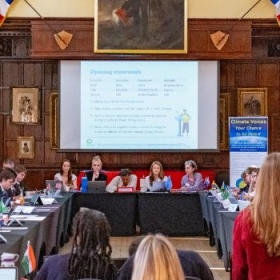
On 30 September, Wellington College hosted its Climate Summit, Mock COP30, an event that brought together students from nine local schools: Brakenhale School, Charters School, Edgbarrow School, Forest Bridge School, Garth Hill College, Holme Grange School, St Crispin’s School, The Holt School and Wellington College Prep.
In collaboration with the Politics Department, Sustainability and InterClimate, the event aimed to put learning into action and promote leadership and global responsibility. It reflected the principles of Education for Human Flourishing and Intergenerational Equity, encouraging students to make ethical decisions today while protecting the wellbeing of future generations.
The concept of a Mock COP, a youth-led climate negotiation simulation, has grown rapidly in recent years, inspired by both Model United Nations and youth climate activism.
The first international youth-led Mock COP took place in 2020 when COP26 was postponed due to the COVID-19 pandemic. Young people from more than 140 countries convened virtually, producing a youth-led treaty with 18 policy recommendations. As Wellington students participated in COP26, the idea was brought to the College to replicate the experience locally.
Since then, Mock COPs have developed into youth-led global events held ahead of formal COPs to amplify young voices and promote authentic diplomatic learning. Wellington College has been an active participant in COP processes since COP25, following the work of the UNFCCC’s Action for Climate Empowerment on climate education and youth engagement.
Through successive conferences, including COP26, COP27 and COP28, students have presented youth perspectives, engaged with policymakers and delivered a student-led declaration to the COP Presidency and UNFCCC Secretariat. These experiences inspired the creation of Wellington’s own Mock COP model, transforming students from observers into negotiators.
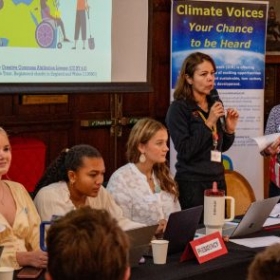
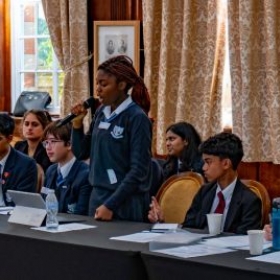
Mock COP30 gave students a platform to experience diplomacy and international collaboration. Delegations representing sixteen Parties, including Australia, Bangladesh, Brazil, China, the EU, India, Indonesia, Nigeria, Uganda, the UAE, the UK and the USA, debated key global themes such as energy transition, climate finance, nature-based solutions, cities and oceans.
Students worked collaboratively to propose practical solutions including debt relief, loss and damage funding, renewable energy investment, forest protection, urban resilience and marine conservation. Their discussions will be reflected in a final student declaration capturing negotiation outcomes and policy proposals.
A participant summarised the experience:
“Taking part in Mock COP30 changed how I see climate action. It’s not just about making speeches but about building trust, seeking compromise and bridging inequalities.”
Mock COP30 involved students from Year 8 to Year 13, supported by Model United Nations leaders and Sustainability Committee members who mentored younger pupils. This structure encouraged collaboration and empathy across year groups.
Ana Romero, Head of Sustainability and Global Climate Education Advisor, said:
“Mock COP30 has reaffirmed our belief that climate education must be more than theory. It must empower students to negotiate, to empathise and to act. Seeing our students step into the roles of climate diplomats reminds us that the next generation already holds the ambition, insight and courage to shape global solutions.”
Looking Ahead
Building on the success of Mock COP30, Wellington College aims to establish a student-led global programme connecting schools across the Wellington Family and beyond. Plans include:
- Creating a global delegation network to link Wellington Family schools through pre-COP simulations and a virtual Mock COP in 2026
- Launching a virtual preparatory programme for Wellington Family students ahead of real COP engagement
- Developing partnerships with MUN societies, climate think tanks, UNFCCC youth networks and universities
- Embedding Mock COP into the curriculum as a long-term sustainability initiative
- Pursuing engagement with UNFCCC youth and observer tracks to ensure student declarations are represented at future COPs
- Piloting a virtual MUN for the Wellington Family in December 2025, attending the Global Citizens Model UN in New York in March 2026 and hosting Mock COP31 in September 2026
Mock COP30 demonstrated how education can move beyond theory, giving students the tools to understand complex global issues and the confidence to help shape solutions for a sustainable future.